
How Grades Fail Students. Why Mastery Can Fix It
Grades are outdated. Mastery is the future.

For decades, grades have been the gold standard for measuring student performance. But are they truly serving students, teachers, or even parents?
Grades often reward compliance—turning in assignments on time, following directions, and aiming for just enough to pass. They subjectively prioritize effort and participation over real comprehension. Meanwhile, a troubling gap has emerged: grade inflation.
If you’re a parent and haven’t heard the term yet, I invite you to tune in! 📺
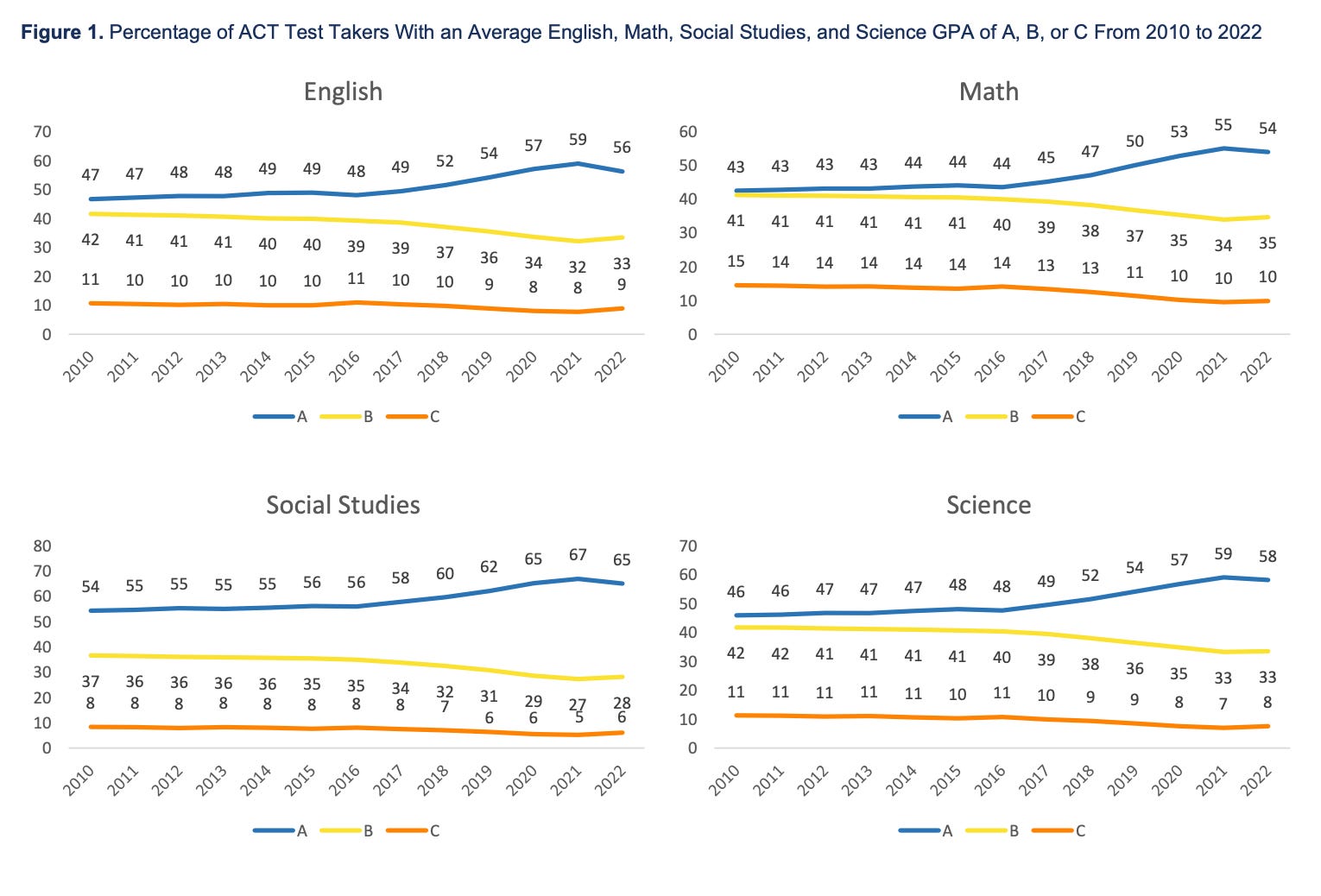
High school GPAs are rising—For the first time in the last 30 years, (I didn’t go back further, but I will bet this has never happened before) a majority of high schoolers are A students in Math, Science and English.
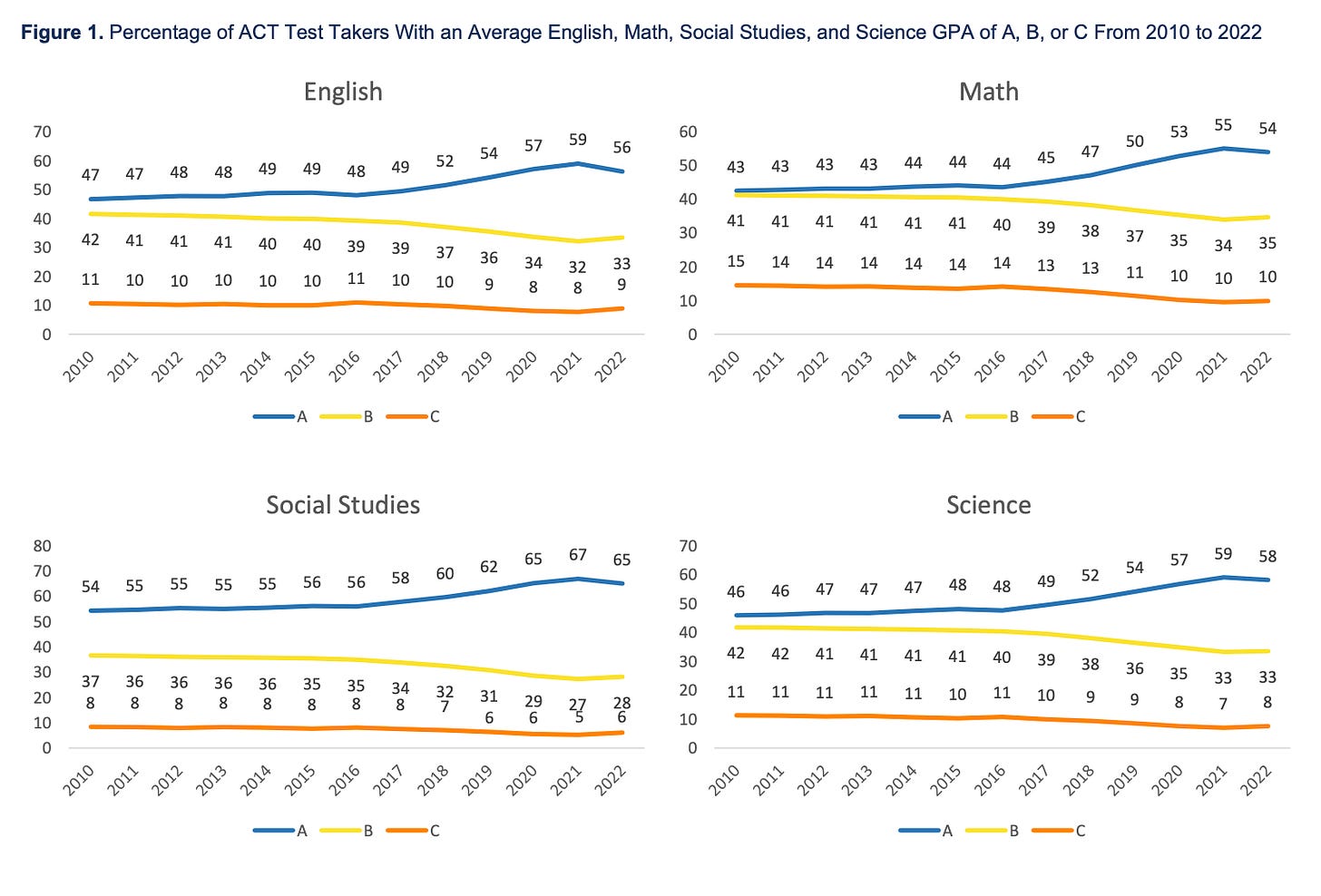
This might be great news if it was paired with increasing performance on standardized tests. But, that is unfortunately going the other direction. 📉
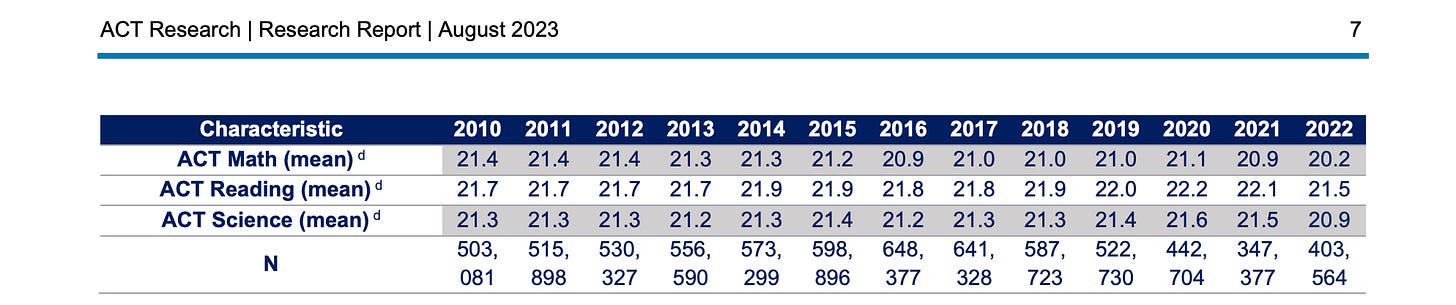
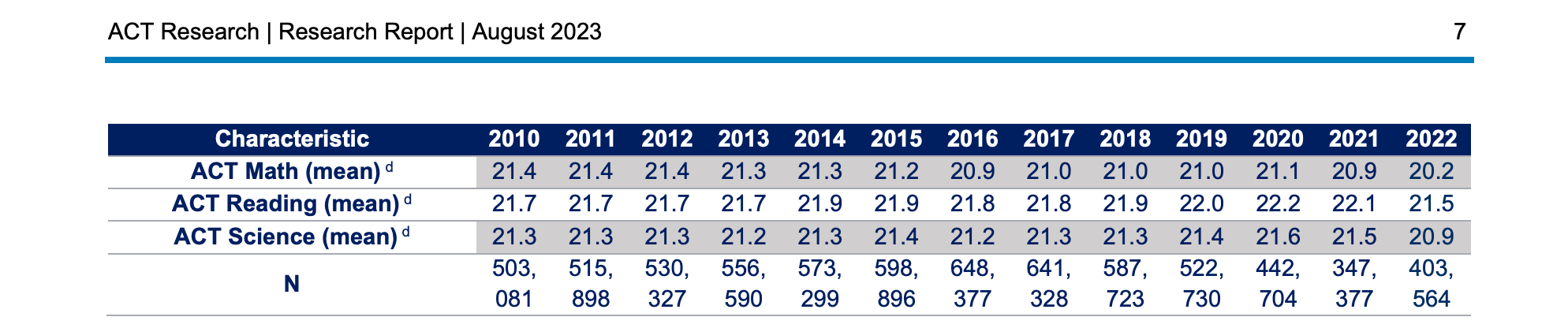
Standardized test scores are falling—ACT composite scores dropped to new lows in Math, Science, English, and Reading. For those saying this was COVID, you may be right, but the pattern has only worsened since the end of the pandemic.
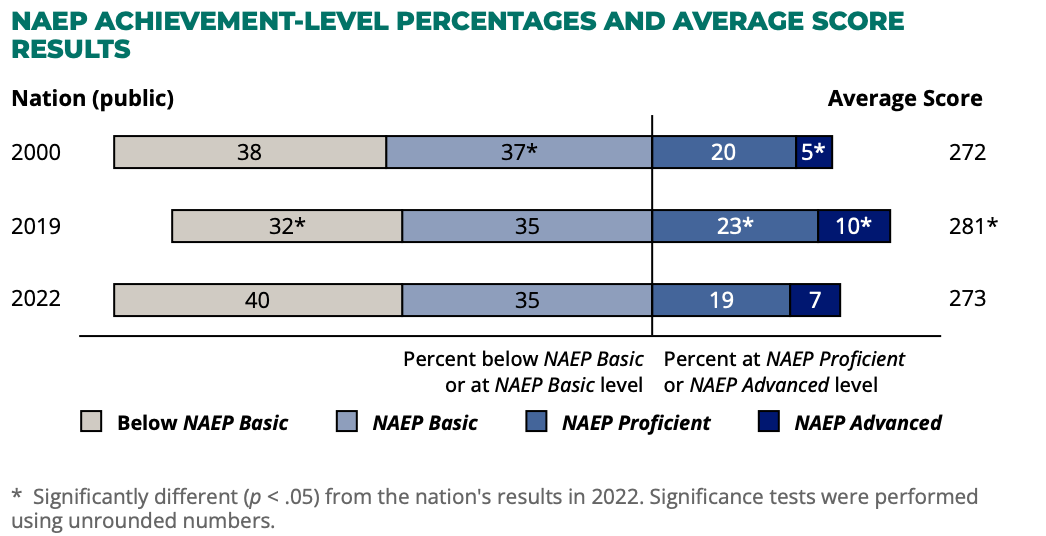
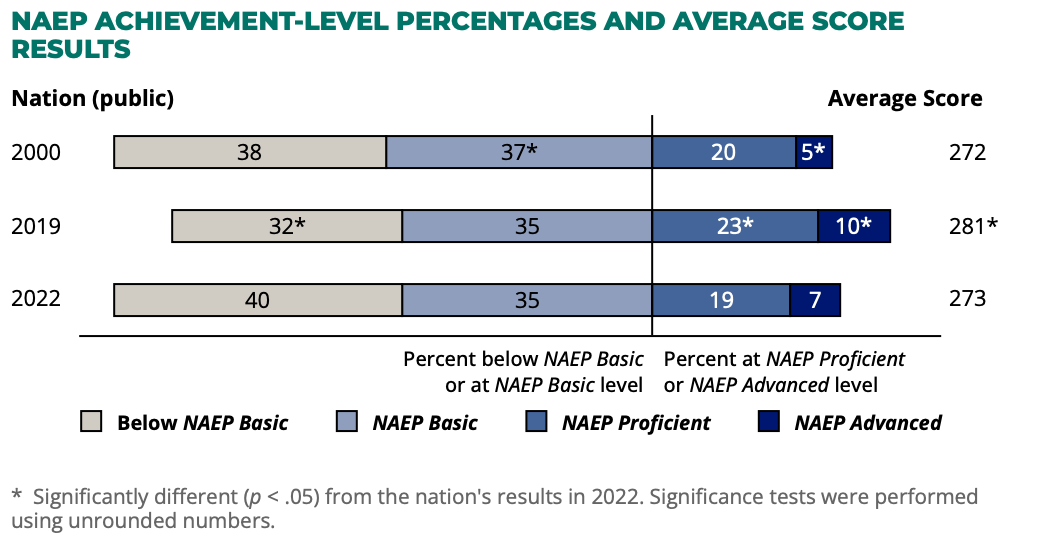
From our National scorecard, which includes a much broader set of students, the findings are unexcitingly similar, showing only about 26% of kids are proficient or better in Math.
Many have discussed grade inflation over the years, but few are talking about solutions. Today, I want to share one: mastery-based learning.
The Problem with Traditional Grades
Grades have been a cornerstone of education for over a century. They appear objective—letters and numbers neatly summarizing student performance. But beneath the surface, grades are deeply subjective, often failing to measure what matters most: understanding and mastery.
Here’s how traditional grading systems fall short:
1. They Allow Minimum Effort
A passing grade—often 70%—sets the bar ridiculously low.
Consider a student who passes a math test with a 70%. This means they’ve missed nearly a third of the material, creating gaps that will compound over time. The system encourages students to do just enough to get by, rather than striving for true comprehension. When this student gets 70% over multiple school years, they begin telling themselves they just aren’t good at the subject.
In reality, it’s not their fault — it was the system that allowed them to progress not knowing 30% of the material.
2. They Burden Teachers
Grading is one of the most time-consuming aspects of teaching.
Think about the hours spent:
Marking papers
Calculating scores
Explaining grade disputes
This workload often comes at the expense of activities that could have a greater impact, like one-on-one coaching or developing engaging lessons. Teachers are stuck balancing the roles of mentor, manager, and scorekeeper—a near-impossible task.
3. They Reflect Compliance, Not Understanding
Grades often reward behavior rather than knowledge. For example:
A student who turns in every assignment on time may get an “A,” even if they lack deep comprehension of the material.
Conversely, a brilliant student who struggles with deadlines may receive a lower grade, despite their mastery of the subject.
This system may privilege students who are organized, well-supported at home, or good at following rules—factors that don’t always correlate with learning. As I reflect on my own time in K12 math, it was often defined by strings of 0’s on homework, followed by 97 on the test. Is that good behavior? Of course not. (What I wouldn’t give to parent my 12 year old self for a day.) But, a B in math was not reflecting what I knew.
Subjectivity in Grading
To highlight the subjectivity inherent in grades, let’s consider two scenarios:
Scenario 1: A history teacher values essay structure and deducts points for grammatical errors. A student with strong writing skills earns an “A,” even if their historical analysis is shallow. Meanwhile, a student with deep insights but weaker writing skills gets a “B.”
Scenario 2: In a group project, one student does most of the work, while others contribute minimally. Everyone gets the same grade, which doesn’t reflect individual understanding or effort.
These examples show how grades can obscure true learning, rewarding qualities unrelated to comprehension or critical thinking.
Mastery Learning: A Better Alternative
Mastery learning offers a fundamentally different approach:
High Standards: Students work until they achieve at least 90% comprehension, eliminating gaps in knowledge and building a strong foundation for future learning.
Targeted Feedback: Instead of vague letters or percentages, students receive actionable insights on their performance and specific guidance for improvement.
Teacher Empowerment: With grading automated or minimized, teachers focus on coaching, mentoring, and fostering critical thinking.
Student Ownership: Students are encouraged to take control of their learning, revisiting material until they truly understand it.
Mastery learning isn’t about “passing” or “failing.” It’s about ensuring every student reaches their full potential by focusing on understanding, not compliance. Plus, mastery can scale.
This shift is more than a policy change—it’s a cultural one, prioritizing depth of knowledge over surface-level achievement.
Why Mastery Works Better
Mastery-based learning isn’t the only approach being explored to address the failings of traditional grades. One alternative gaining traction is equitable grading. Proponents argue it’s a fairer way to evaluate students by accounting for external factors that can disproportionately impact certain learners, such as poverty, access to resources, or even systemic biases.
What is Equitable Grading?
Equitable grading focuses on practices like:
Eliminating penalties for late work to avoid punishing students for circumstances beyond their control.
Allowing retakes or revisions so students have more opportunities to demonstrate learning.
De-emphasizing homework or other assignments that might not reflect actual mastery.
These adjustments aim to create a more level playing field for students from diverse backgrounds.
Why It Falls Short
While equitable grading is a step in the right direction, it doesn’t address the root problem: grades themselves. By tweaking the existing system, it often rebrands the same flawed tools rather than replacing them.
Here are its key limitations:
Focus on Effort Over Understanding:
Many equitable grading policies emphasize effort and opportunity rather than actual comprehension. A student might earn a passing grade for demonstrating perseverance but still graduate without mastering key skills.Subjectivity:
Equitable grading often introduces subjective elements, such as allowing late work or extra credit, which may inadvertently reduce consistency across classrooms or schools.Retention Challenges:
Without a clear standard for mastery, it’s harder to ensure students leave school with the skills they need to succeed in higher education or the workplace.
Why Mastery Stands Out
Mastery-based learning addresses these shortcomings by focusing on what students know and can apply—not just how much effort they put in.
Key distinctions between mastery-based learning and equitable grading:
Standardization: Mastery sets a clear, universal bar (e.g., 90% comprehension) for all students, ensuring that equity doesn’t mean lowering expectations.
Growth-Oriented: By allowing students to work at their own pace, mastery builds confidence and depth of understanding without penalizing them for needing more time.
Objective Results: Mastery-based assessments focus on demonstrated knowledge and skills, removing much of the subjectivity inherent in grading systems.
What About Other Philosophies?
Other grading alternatives include:
Pass/Fail Systems: Simplifies evaluation but offers limited feedback for improvement.
Competency-Based Learning: Similar to mastery but often broader in scope, it assesses cumulative skills and knowledge over time.
Narrative Grading: Provides qualitative feedback rather than scores but can be time-intensive and inconsistent across teachers.
Each of these systems contributes valuable ideas but often struggles with scalability or practicality. Mastery, on the other hand, integrates high expectations, personalization, and efficiency in a way that directly benefits students and teachers alike.
Mastery as a Comprehensive Solution
Mastery doesn’t replace equity—it builds on it. It ensures every student has the opportunity to succeed by focusing on their learning journey rather than arbitrary grades. While no system is perfect, mastery’s emphasis on understanding, fairness, and skill-building makes it a strong contender for the future of education.
The Role of Teachers in Mastery Learning
Critics of mastery-based learning often ask, “What about the teachers?”
The truth is, mastery doesn’t just benefit students—it makes teaching more rewarding, too.
Here’s how teachers thrive in a mastery-based classroom:
Less Grading, More Mentoring:
With grades no longer the focus, teachers can dedicate their energy to coaching students through challenges.Personalized Support:
Teachers identify specific gaps for each student and help them overcome obstacles at their own pace.Deeper Connections:
By focusing on individual progress, teachers build stronger relationships with their students—relationships that foster trust, confidence, and growth.
Teachers stop being scorekeepers and become the mentors they were meant to be.
A Better Future Without Grades
A Vision for Mastery Learning
Imagine this:
A student tackling a tough problem—not for a grade, but for the satisfaction of understanding it fully.
A teacher spending their day sparking curiosity and mentoring students, freed from the grind of grading.
A classroom buzzing with energy, where every child is learning at their own pace, driven by their own goals.
Now picture your child in that room. They aren’t working to "just pass." They’re mastering concepts, building confidence, and preparing for a world that values problem-solvers, critical thinkers, and lifelong learners.
This isn’t some distant dream. It’s happening in schools that have adopted mastery-based learning—and it’s something every parent can advocate for.
The truth is, there’s no one-size-fits-all solution to fixing education. But mastery isn’t just one idea—it’s a mindset. It’s a way of shifting the focus from compliance to comprehension, from grades to growth.
If this resonates with you, start asking questions:
What does mastery look like in your child’s school?
How can you find or advocate for programs that prioritize depth over speed?
What would it mean for your family if learning became about true understanding?
Our kids deserve better. And as parents, you have the power.